Transformer vs LSTM: A Helpful Illustrated Guide
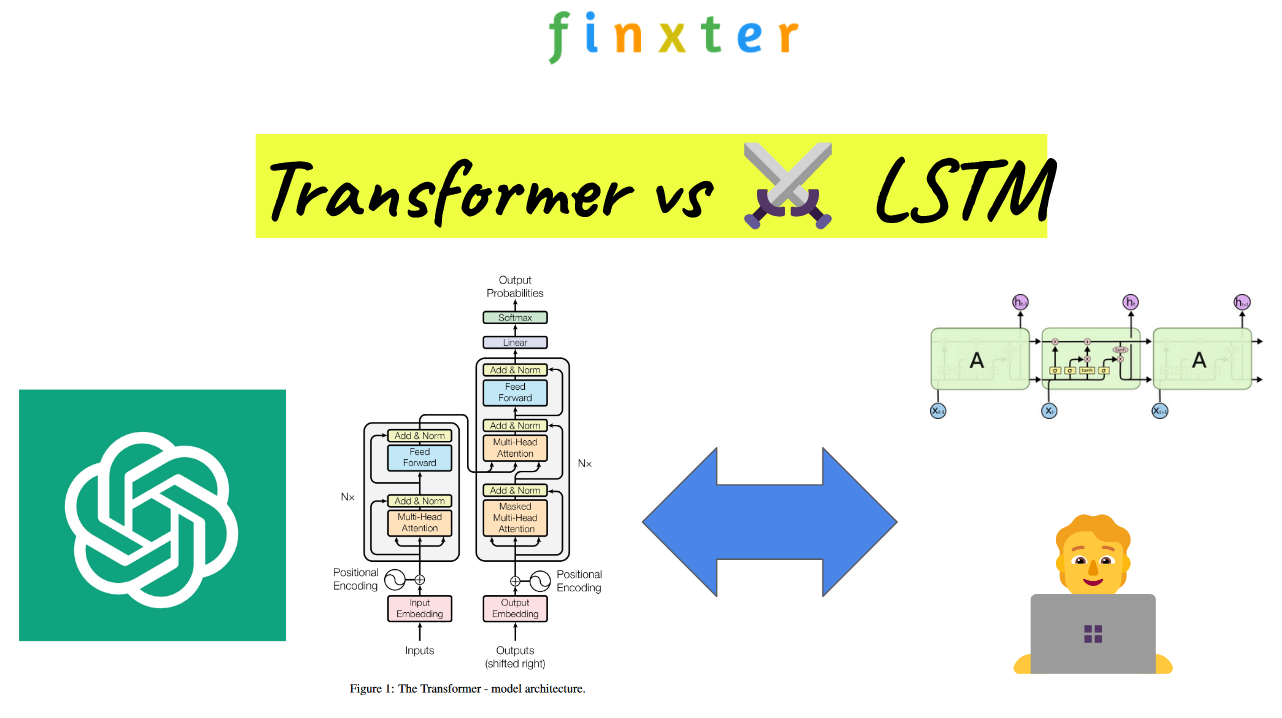
In the realm of natural language processing and machine learning, two common and highly effective models for handling sequential data are Transformers and Long Short-Term Memory (LSTM) networks. While both models have proven successful in various applications, they differ in terms of architectural structure and how they process and handle data. LSTM networks, a type … Read more

OpenAI Gym Quickstart

OpenAI Gym Overview πŸ’‘ OpenAI Gym is a powerful toolkit designed for developing and comparing reinforcement learning algorithms. By offering a standard API to communicate between learning algorithms and environments, Gym facilitates the creation of diverse, tunable, and reproducible benchmarking suites for a broad range of tasks. The availability of different environments, varying in difficulty, … Read more

AI-Assisted Coding: New Google Research Says How You Should Use It

As the landscape of technology and machine learning evolves, we’re witnessing a paradigm shift in the field of software development. The advent of AI-powered code-writing assistants, like Github’s Copilot, Alphabet’s DeepMind’s AlphaCode, and Amazon’s CodeWhisperer, is revolutionizing the traditional practice of writing code and molding new development workflows. This Finxter article based on a new … Read more

Top 5 LLM Python Libraries Like OpenAI, LangChain, Pinecone

Large language models (LLMs) are all the hype right now, and rightly so. Using LLMs, i.e., prompting, is the new programming. In this quick article, I’ll show you the best LLM Python libraries. Let’s get started! πŸ‘‡ Top LLM Python Libraries First, we’ll cover OpenAI, LangChain, Hugging Face, Cohere, Pinecone, and ChatOpenAI. OpenAI OpenAI is … Read more

GPT4All vs Ooga Booga

GPT-4All and Ooga Booga are two prominent tools in the world of artificial intelligence and natural language processing. GPT-4All, developed by Nomic AI, is a large language model (LLM) chatbot fine-tuned from the LLaMA 7B model, a leaked large language model from Meta (formerly Facebook). This chatbot is trained on a massive dataset of text … Read more

GPT4all vs Vicuna: Battle of Open-Source LLMs βš”οΈ

Subjectively, I found Vicuna much better than GPT4all based on some examples I did in text generation and overall chatting quality. Yes, GPT4all did a great job extending its training data set with GPT4all-j, but still, I like Vicuna much more. Many voices from the open-source community (e.g., this one from Hacker News) agree with … Read more

GPT4ALL vs GPT4ALL-J

In the world of AI-assisted language models, GPT4All and GPT4All-J are making a name for themselves. Both are emerging as open-source models built on comprehensive datasets and powerful natural language processing capabilities. GPT4All is an ecosystem for open-source large language models (LLMs) that comprises a file with 3-8GB size as a model. GPT4All-J builds on … Read more

GPT4ALL vs Llama: Open-source LLM Battle βš”οΈ

The world of machine learning language models is rapidly evolving, with various powerful technologies competing for the top spot. Two of the most noteworthy contenders in this arena are GPT4All and LLaMA. GPT4All, originating from Nomic, is a comprehensive ecosystem for open-source chatbots that offers a versatile framework for training language models. On the other … Read more

GPT4all vs Alpaca: Comparing Open-Source LLMs

When exploring the world of large language models (LLMs), you might come across two popular models – GPT4All and Alpaca. These open-source models have gained significant traction due to their impressive language generation capabilities. In this article, we will delve into the intricacies of each model to help you better understand their applications and differences. … Read more

Graphviz Executables Not Found Error (Fixed)

Are you having trouble running Graphviz executables? Are you encountering an error message that says “Graphviz’s executables not found”? This is a common issue that can occur when working with Graphviz, a popular open-source graph visualization software. Graphviz is a powerful tool used for creating diagrams, flowcharts, and other visual representations of data. However, it … Read more

PEP 8 Guidelines: Essential Tips for Clean Python Code

The PEP 8 guidelines are an essential aspect of writing clean and readable Python code. Developed in 2001 by Guido van Rossum, Barry Warsaw, and Nick Coghlan, these guidelines focus on enhancing the readability and consistency of Python code for all programmers. πŸ’‘ PEP 8, which stands for Python Enhancement Proposal 8, has significantly contributed … Read more