How to Convert a String to a Boolean in Python?
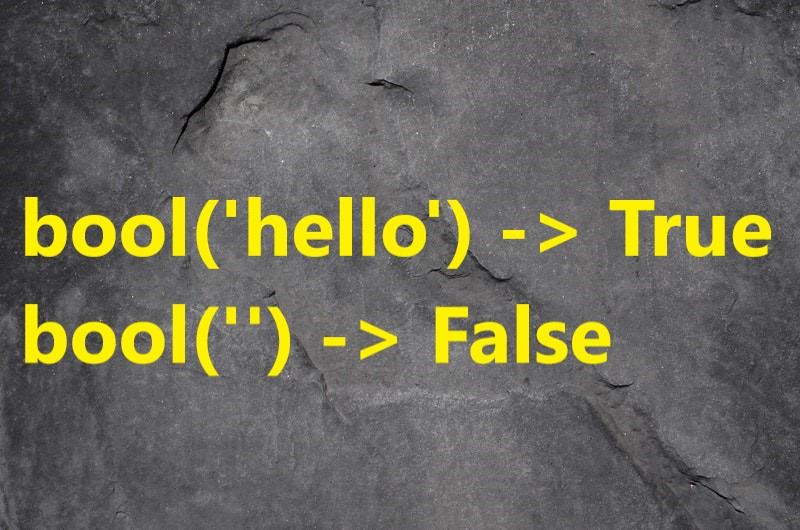
You can convert a string value s to a Boolean value using the Python function bool(s). Here are a few examples: As you can see, any string will be converted to the Boolean value True–with one exception: the empty string ”. This is contra-intuitive for many people because they think that the string ‘False’ should … Read more

What Does it Take to Be a Freelancer?

Becoming a freelancer is one of the most interesting opportunities these days. It allows you to earn money from the comfort of your own home. For example, average Python freelancers regularly earn between $50 and $61 per hour on freelancer platforms such as Upwork. Surprisingly, many people fear to take the first steps. They are … Read more

A Mathematical Edge in Every Transaction…

If you want to be more successful, you need to think in probabilities. I just watched the 2000 Berkshire Hathaway Annual Shareholder Meeting because I was interested in how Warren Buffet commented in the burst of the Internet Bubble. Warren Buffet argues that he doesn’t care if some things don’t turn out the best way. … Read more

[Video Collection] How to Start Your Successful Freelance Coding Business

​Do you want to learn to code, create your own coding business, and earn more money in the process? Over the months, I’ve created tons of short videos (many of them on the way home from ​my son’s kindergarden) ​to help you create a thriving coding business with Python. β€‹If you really want to accelerate your speed, … Read more

How to Differentiate Beginner from Professional Coder?

Every Python programmer has its own skill level with respect to Knowledge of the programming language and syntax Ability to solve problems Speed of code understanding Knowledge of algorithms and code complexity Ability to select appropriate data structures. Although it is challenging to aggregate these skills into a single number that quantifies the degree of … Read more

Zip & Unzip: How Does It Work in Python?

The zip() function takes a number of iterables and aggregates them to a single one by combining the i-th values of each iterable into a tuple. For example, zip together lists [1, 2, 3] and [4, 5, 6] to [(1,4), (2,5), (3,6)]. You can unzip this list of tuples by calling zip(*list) using the unpacking … Read more

What is the Fastest and Easiest Way to Learn Python Programming?

My freelancer course member Pratyush wants to improve learning efficiency in Python. He asked me the question: “how can I accelerate the pace of my problem-solving mind?” Focus first and foremost on reading and writing massive amounts of code. It’s that simple. Maximize the time you are looking at source code, and improvement will come … Read more