Division in Python

The double-frontslash // operator performs integer division and the single-frontslash / operator performs float division. An example for integer division is 40//11 = 3. An example for float division is 40/11 = 3.6363636363636362. A crucial lesson you need to master as a programmer is “division in Python”. What does it mean to divide in Python? … Read more
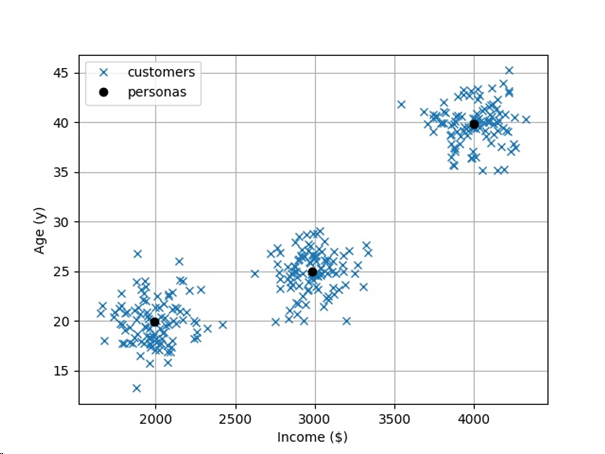
[Tutorial] K-Means Clustering with SKLearn in One Line

If there is one clustering algorithm you need to know – whether you are a computer scientist, data scientist, or machine learning expert – it’s the K-Means algorithm. In this tutorial drawn from my book Python One-Liners, you’ll learn the general idea and when and how to use it in a single line of Python … Read more

Sklearn fit() vs transform() vs fit_transform() – What’s the Difference?

Scikit-learn has a library of transformers to preprocess a data set. These transformers clean, generate, reduce or expand the feature representation of the data set. These transformers provide the fit(), transform() and fit_transform() methods. The fit() method identifies and learns the model parameters from a training data set. For example, standard deviation and mean for … Read more

Are Energy Costs and CapEx Invested in Bitcoin Worth It?

Bitcoin capital expenditure and energy overhead are often criticized to be unsustainably high. But are they worth it in relation to the value provided by the Bitcoin network? TLDR; Capex and energy costs are estimated using the USD value of the transaction fees paid by the Bitcoin traders. The value of the Bitcoin monetary system … Read more

How to Get All Transactions for a BTC Address in Python?

Problem Formulation Given a single Bitcoin address in the form of a stream of characters such as the address of the first “Genesis” block ever created on the Bitcoin blockchain: 12c6DSiU4Rq3P4ZxziKxzrL5LmMBrzjrJX How to get all transactions for this BTC address in a Python script? Solution To get all transactions of a given Bitcoin address, import … Read more

How to Get Binance API Prices in Python at a Precise Time?

Problem Formulation Say, you want to get the current price of a cryptocurrency using Python’s inofficial binance API. How do you do this for a precise point in time? Step 1: Install Python Binance with pip If you haven’t already, install the Python Binance API using the pip package manager. Run pip install python-binance in … Read more

How To Plot SKLearn Confusion Matrix With Labels?

Summary: The best way to plot a Confusion Matrix with labels, is to use the ConfusionMatrixDisplay object from the sklearn.metrics module. Another simple and elegant way is to use the seaborn.heatmap() function. Note: All the solutions provided below have been verified using Python 3.9.0b5. Problem Formulation Imagine the following lists of Actual and Predicted values … Read more

How to Convert a Tensor to a NumPy Array in TensorFlow?

There are two ways to convert a Tensor to a NumPy array: TensorFlow version 2.x — use tensor.numpy() TensorFlow version 1.x — use tensor.eval(session=tf.compat.v1.Session()) Let’s dive into these two methods in greater detail. Method 1: Explicit Tensor to NumPy Array Conversion in TensorFlow 2.x To convert a tensor t to a NumPy array in TensorFlow … Read more

NumPy Diff Simply Explained [Tutorial + Video]

NumPy’s np.diff() function calculates the difference between subsequent values in a NumPy array. For example, np.diff([1, 2, 4]) returns the difference array [1 2]. Here is a simple example to calculate the Fibonacci number differences: This code snippet shows the most simple form of the np.diff() method: how to use it on a one-dimensional NumPy … Read more