Pandas DataFrame Object: A Beginner’s Guide

When working with data in Python, one of the most powerful tools at your disposal is the pandas DataFrame. πŸ’‘ A DataFrame is a two-dimensional data structure, which essentially looks like a table with rows and columns. This versatile data structure is widely used in data science, machine learning, and scientific computing, among other data-intensive … Read more

How Can I Join Two Lists in Python?

Joining two lists in Python is a common operation when working with data structures, as it allows you to merge different sets of information highly efficiently. Python offers other approaches to combine lists, such as list comprehension and extending lists. The easiest approach is the ‘+‘ operator as it stands out for its simplicity and … Read more

Pandas Series Object – A Helpful Guide with Examples

If you’re working with data in Python, you might have come across the pandas library. 🐼 One of the key components of pandas is the Series object, which is a one-dimensional, labeled array capable of holding data of any type, such as integers, strings, floats, and even Python objects πŸ˜ƒ. The Series object serves as … Read more

Python Container Types: A Quick Guide

If you’re working with Python, most of the data structures you’ll think about are container types. πŸš‚πŸšƒπŸšƒπŸšƒ These containers are special data structures that hold and manage collections of elements. Python’s most commonly used built-in container types include tuples, lists, dictionaries, sets, and frozensets πŸ“¦. These containers make it easy for you to store, manage … Read more

Python List of Tuples to DataFrame 🐼

To convert a list of tuples to a Pandas DataFrame, import the pandas library, call the DataFrame constructor, and pass the list of tuples as the data argument such as in pd.DataFrame(tuples_list, columns=[‘Number’, ‘Letter’]). Here’s a minimal example: The output of the given code will be a Pandas DataFrame with two columns, ‘Number’ and ‘Letter’, … Read more

Dictionary of Lists to DataFrame – Python Conversion

Problem Formulation Working with Python often involves processing complex data structures such as dictionaries and lists. In many instances, it becomes necessary to convert a dictionary of lists into a more convenient and structured format like a Pandas DataFrame 🐼. DataFrames offer numerous benefits, including easier data handling and analysis πŸ”, as well as an … Read more

Python Pickle Module: Simplify Object Persistence [Ultimate Guide]

πŸ₯’ Python pickling is another word for serializing and de-serializing Python objects, so you can store them in a binary format or transmit them across a network. Pickling helps preserving the state of objects, such as data structures or machine learning models, between different sessions or applications. The pickle module in Python’s standard library provides … Read more

How to Correctly Write a Raw Multiline String in Python: Essential Tips

Python provides an effective way of handling multiline strings, which you might have encountered when working with lengthy text or dealing with code that spans multiple lines. Understanding how to correctly write a raw multiline string in Python can be essential for maintaining well-structured and easily readable code. Ordinarily, we express strings in Python using … Read more

How to Create a Sample Spreadsheet With Dummy Data Using ChatGPT: A Concise Guide

I rely on spreadsheets every day to manage my business, make informed financial choices, and organize lists that help structure my day. My business simply couldn’t function without the aid of spreadsheets. πŸ“ˆ Spreadsheets are immensely useful tools for managing and analyzing data. Among their many features, one invaluable capability is πŸ’» generating sample data … Read more

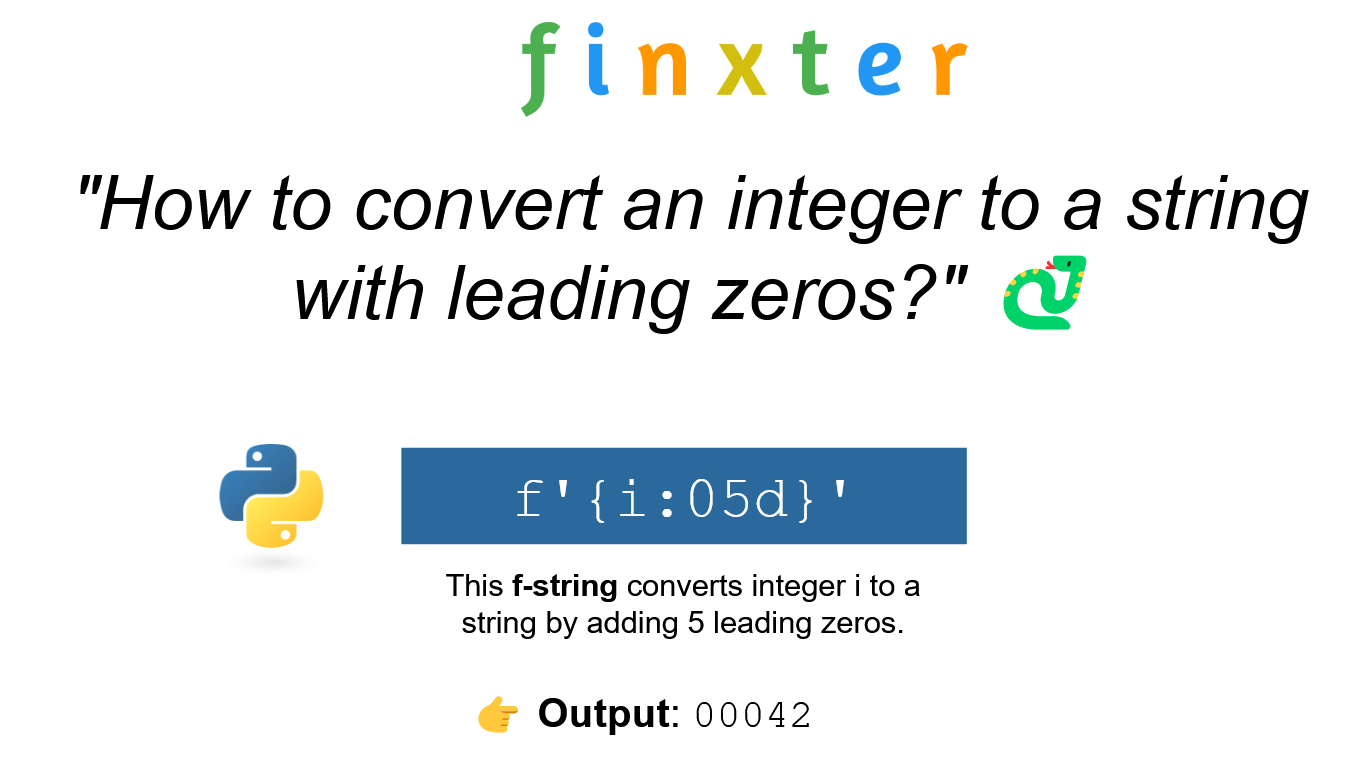
Python Int to String with Leading Zeros

To convert an integer i to a string with leading zeros so that it consists of 5 characters, use the format string f'{i:05d}’. The d flag in this expression defines that the result is a decimal value. The str(i).zfill(5) accomplishes the same string conversion of an integer with leading zeros. Challenge: Given an integer number. … Read more

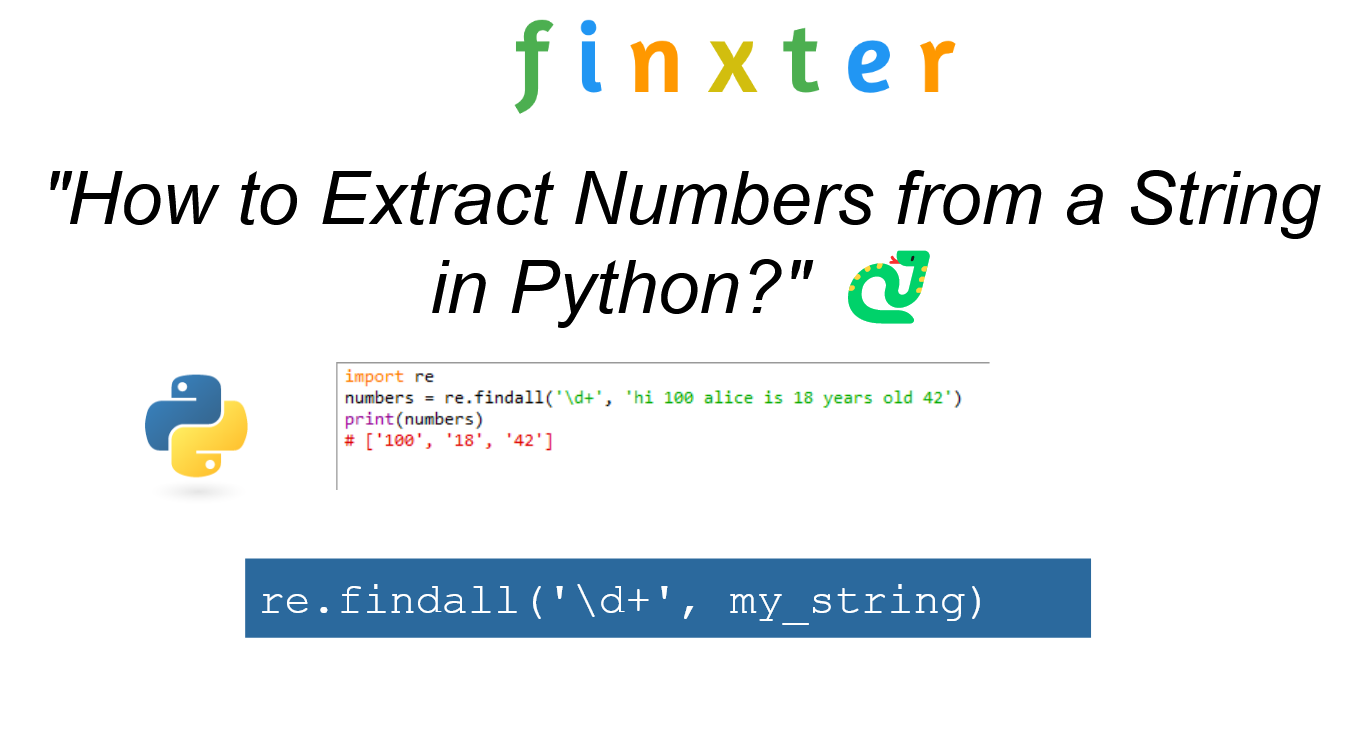
How To Extract Numbers From A String In Python?

The easiest way to extract numbers from a Python string s is to use the expression re.findall(‘\d+’, s). For example, re.findall(‘\d+’, ‘hi 100 alice 18 old 42’) yields the list of strings [‘100′, ’18’, ’42’] that you can then convert to numbers using int() or float(). There are some tricks and alternatives, so keep reading … Read more