Python Find in Sorted List

Python’s built-in sorted() function enables programmers to sort a list efficiently and easily. On the other hand, the list.sort() method provides an in-place sorting mechanism. Additionally, Python allows for custom sorting using the key parameter in these functions, enabling more advanced sorting scenarios. In this article, I’ll show you how to find an element in … Read more

How Can I Join Two Lists in Python?

Joining two lists in Python is a common operation when working with data structures, as it allows you to merge different sets of information highly efficiently. Python offers other approaches to combine lists, such as list comprehension and extending lists. The easiest approach is the ‘+‘ operator as it stands out for its simplicity and … Read more

Python Converting List of Strings to * [Ultimate Guide]

Since I frequently handle textual data with Python 🐍, I’ve encountered the challenge of converting lists of strings into different data types time and again. This article, originally penned for my own reference, decisively tackles this issue and might just prove useful for you too! Let’s get started! πŸ‘‡ Python Convert List of Strings to … Read more

Python Container Types: A Quick Guide

If you’re working with Python, most of the data structures you’ll think about are container types. πŸš‚πŸšƒπŸšƒπŸšƒ These containers are special data structures that hold and manage collections of elements. Python’s most commonly used built-in container types include tuples, lists, dictionaries, sets, and frozensets πŸ“¦. These containers make it easy for you to store, manage … Read more

Dictionary of Lists to DataFrame – Python Conversion

Problem Formulation Working with Python often involves processing complex data structures such as dictionaries and lists. In many instances, it becomes necessary to convert a dictionary of lists into a more convenient and structured format like a Pandas DataFrame 🐼. DataFrames offer numerous benefits, including easier data handling and analysis πŸ”, as well as an … Read more

Find the Median Index in Python

🐍 Question: How to find the index of the median element in a Python list? Something like argmedian()? In case you need a quick refresher, I have written this tutorial on finding the median itself (but not yet its index): πŸ‘‰ Recommended: 6 Ways to Get the Median of a Python List Solution A multi-liner … Read more

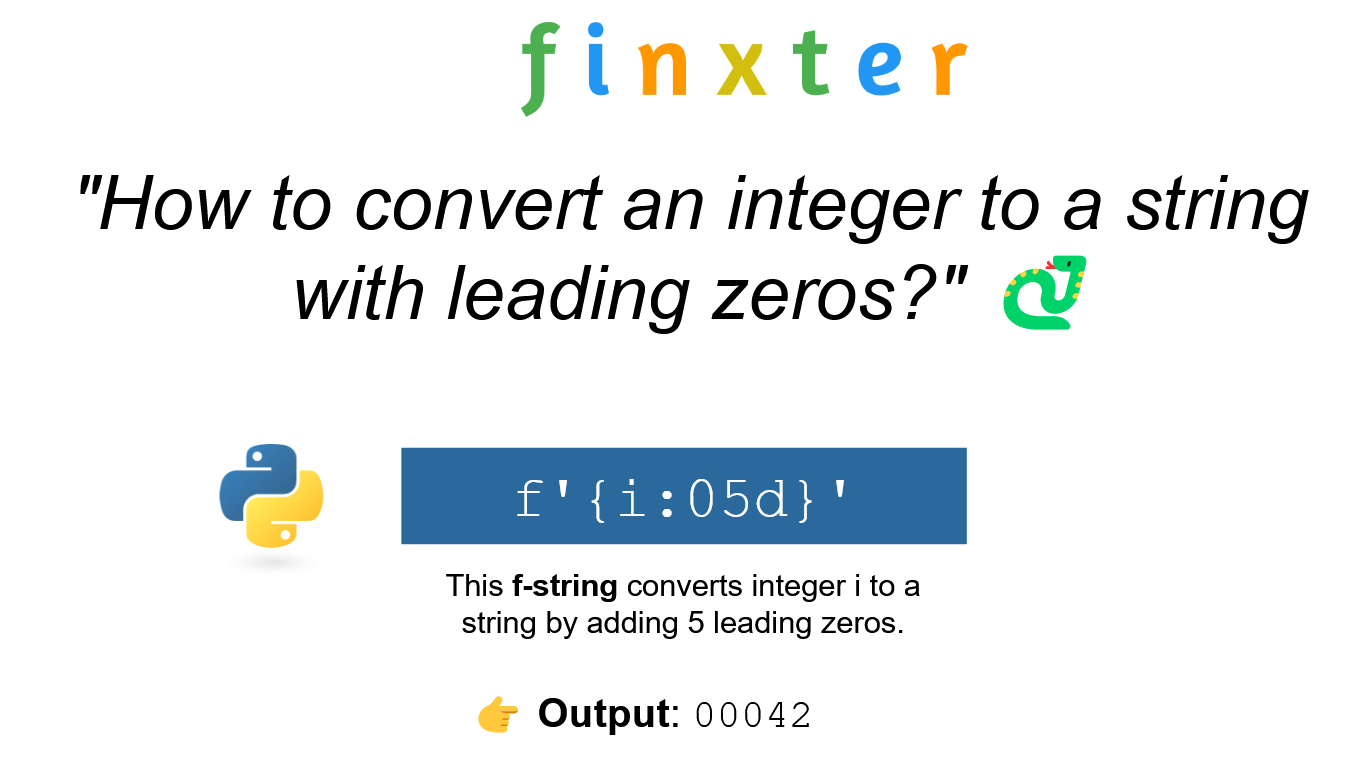
Python Int to String with Leading Zeros

To convert an integer i to a string with leading zeros so that it consists of 5 characters, use the format string f'{i:05d}’. The d flag in this expression defines that the result is a decimal value. The str(i).zfill(5) accomplishes the same string conversion of an integer with leading zeros. Challenge: Given an integer number. … Read more

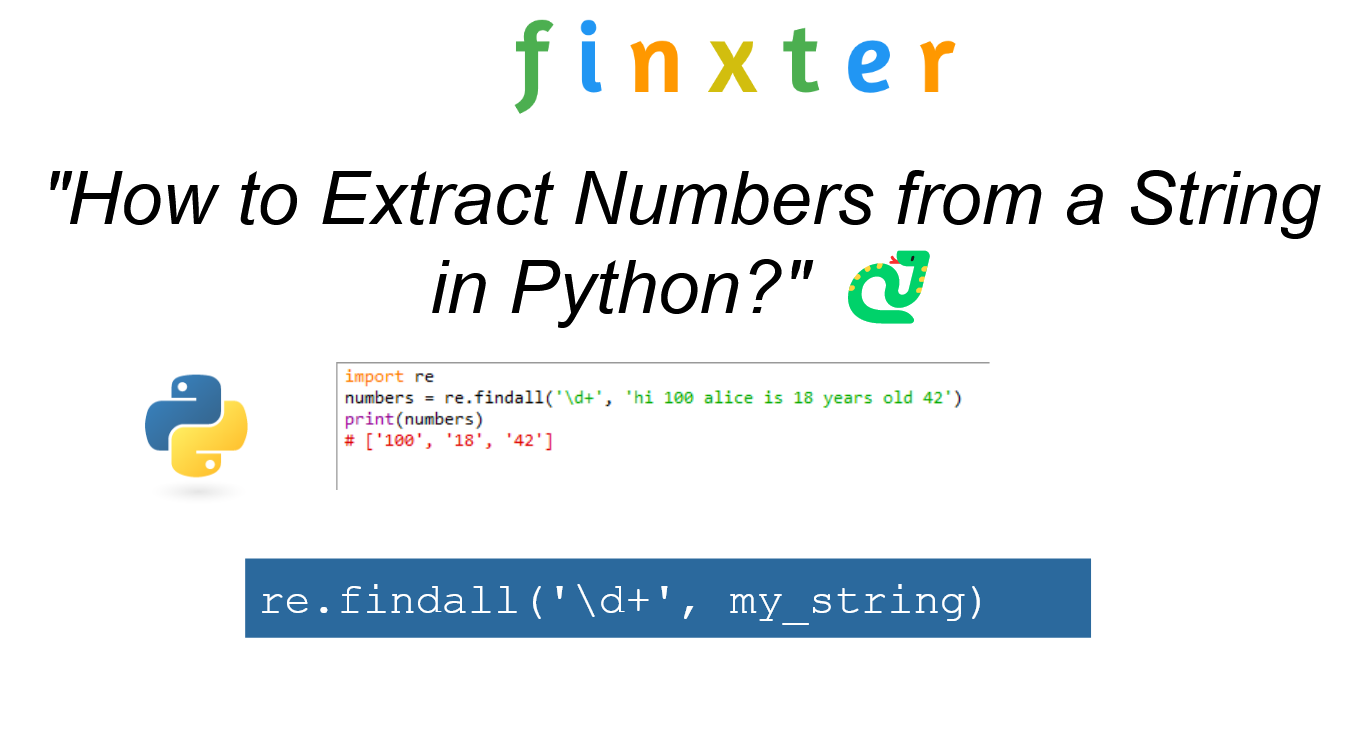
How To Extract Numbers From A String In Python?

The easiest way to extract numbers from a Python string s is to use the expression re.findall(‘\d+’, s). For example, re.findall(‘\d+’, ‘hi 100 alice 18 old 42’) yields the list of strings [‘100′, ’18’, ’42’] that you can then convert to numbers using int() or float(). There are some tricks and alternatives, so keep reading … Read more

Python Dictionary Append – 4 Best Ways to Add Key/Value Pairs

You can add multiple key-value pairs to a Python dictionary by using the update() method and passing a dictionary as an argument. For example, dict1.update(dict2) will insert all key-value pairs of dict2 into dict1. You can add a single key:value pair to a Python dictionary by using the square bracket approach dict[key] = value. In … Read more