Python Regex Lookahead and Lookbehind — A Helpful Guide

Python Lookahead You might find yourself working with regular expressions in Python, and the lookahead feature is quite handy in many situations. Lookahead comes in two flavors: positive lookahead and negative lookahead. Let’s explore these types of lookahead and see how you can use them in your Python code! 🐍 Positive lookahead is an assertion … Read more

Python Converting List of Strings to * [Ultimate Guide]

Since I frequently handle textual data with Python 🐍, I’ve encountered the challenge of converting lists of strings into different data types time and again. This article, originally penned for my own reference, decisively tackles this issue and might just prove useful for you too! Let’s get started! πŸ‘‡ Python Convert List of Strings to … Read more

Python Regex Capturing Groups – A Helpful Guide (+Video)

Python’s regex capturing groups allow you to extract parts of a string that match a pattern. For example: match = re.search(r'(\d+)’, ‘abc123’) captures the digits, and match.group(1) returns ‘123’. One of the powerful aspects of Python’s regular expression capabilities is the use of capturing groups. By using capturing groups, you can easily extract specific portions … Read more

Python f-Strings — The Ultimate Guide

Python f-strings, available since Python 3.6, offer a concise way to embed expressions in string literals using curly braces {}. They improve readability and performance over older methods like %-formatting and str.format(). To use f-strings, prefix the string with “f” or “F” and enclose expressions within braces: f”My name is {name} and I am {age} … Read more

How to Correctly Write a Raw Multiline String in Python: Essential Tips

Python provides an effective way of handling multiline strings, which you might have encountered when working with lengthy text or dealing with code that spans multiple lines. Understanding how to correctly write a raw multiline string in Python can be essential for maintaining well-structured and easily readable code. Ordinarily, we express strings in Python using … Read more

Python Raw Strings: A Helpful Easy Guide

πŸ’‘ Abstract: Python raw strings are a convenient way to handle strings containing backslashes, such as regular expressions or directory paths on Windows. By prefixing a string with the letter ‘r’ or ‘R’, the string becomes a raw string and treats backslashes as literal characters instead of escape characters. [1] This feature simplifies working with … Read more

Python Strings Made Easy

Python is a versatile programming language with a wide range of applications. One of the essential aspects of Python is its ability to manipulate strings. πŸ’‘ Strings in Python are sequences of characters, such as text or numbers, enclosed in single or double quotes. As Python does not have a dedicated character data type, a … Read more

Python Int to String with Leading Zeros

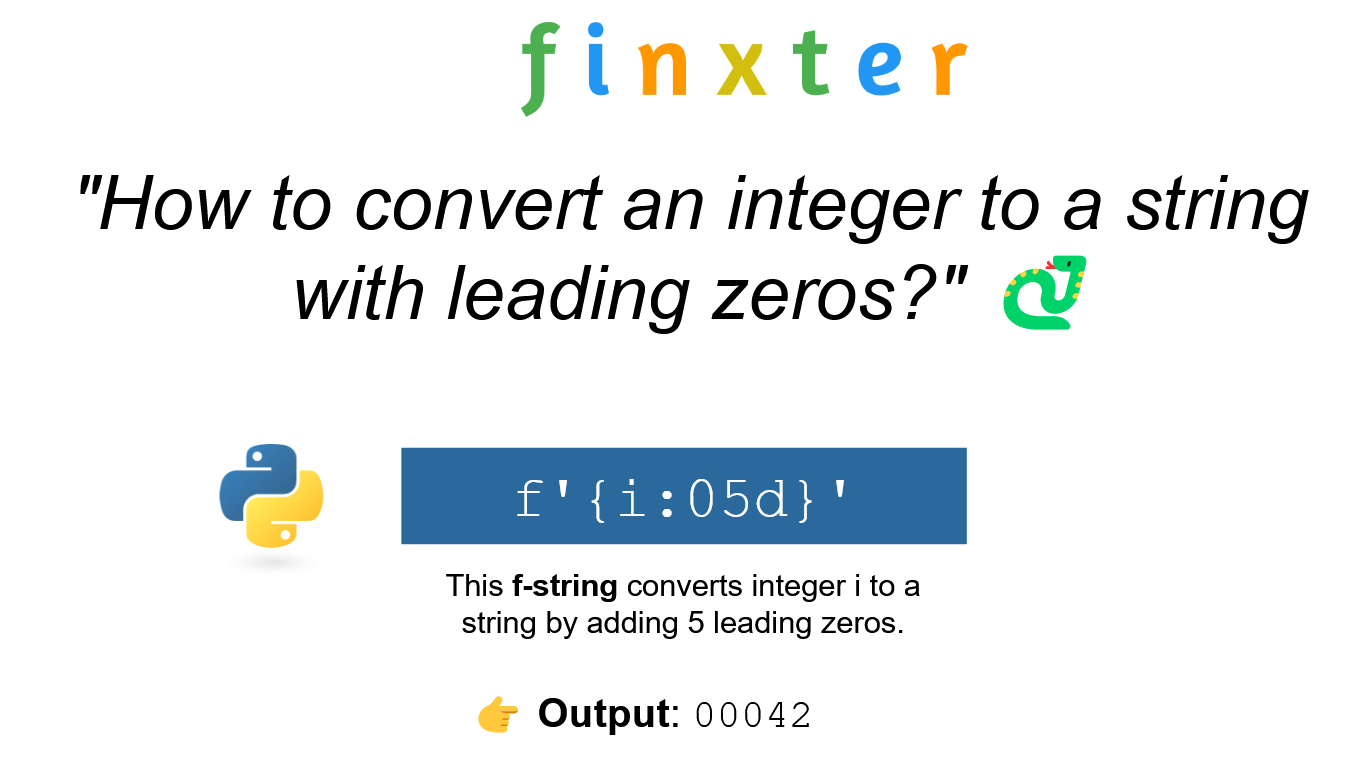
To convert an integer i to a string with leading zeros so that it consists of 5 characters, use the format string f'{i:05d}’. The d flag in this expression defines that the result is a decimal value. The str(i).zfill(5) accomplishes the same string conversion of an integer with leading zeros. Challenge: Given an integer number. … Read more

How To Extract Numbers From A String In Python?

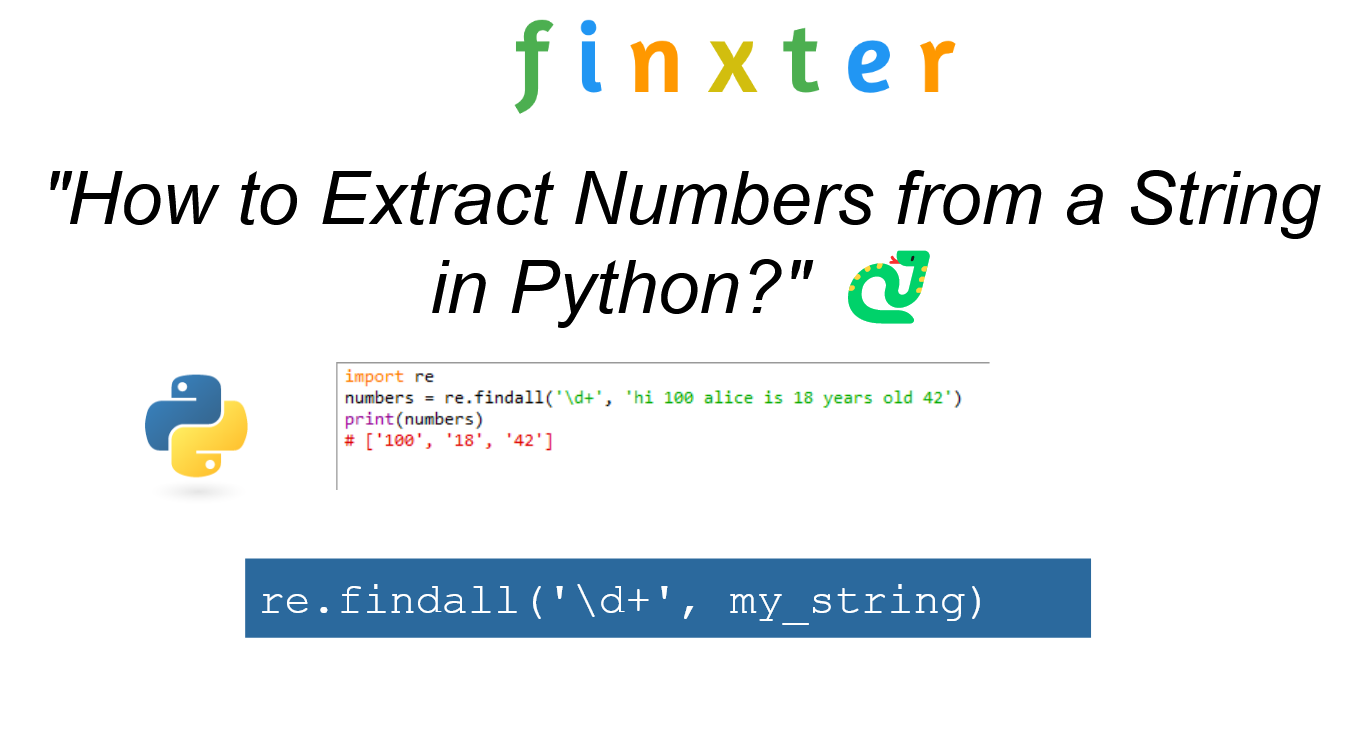
The easiest way to extract numbers from a Python string s is to use the expression re.findall(‘\d+’, s). For example, re.findall(‘\d+’, ‘hi 100 alice 18 old 42’) yields the list of strings [‘100′, ’18’, ’42’] that you can then convert to numbers using int() or float(). There are some tricks and alternatives, so keep reading … Read more