np.nonzero() – A Simple Guide with Video

This article explains first how the NumPy nonzero() function works. It then goes on to apply it to a practical problem on how to find array elements using the nonzero() function in NumPy in a practical data science example. Syntax numpy.nonzero(a) The np.nonzero(arr) function returns the indices of the elements of an array or Python … Read more


NumPy Broadcasting – A Simple Tutorial

Broadcasting describes how NumPy automatically brings two arrays with different shapes to a compatible shape during arithmetic operations. Generally, the smaller array is “repeated” multiple times until both arrays have the same shape. Broadcasting is memory-efficient as it doesn’t actually copy the smaller array multiple times. Here’s a minimal example: Let’s have a more gentle … Read more

SVM sklearn: Python Support Vector Machines Made Simple

Support Vector Machines (SVM) have gained huge popularity in recent years. The reason is their robust classification performance – even in high-dimensional spaces: SVMs even work if there are more dimensions (features) than data items. This is unusual for classification algorithms because of the curse of dimensionality – with increasing dimensionality, data becomes extremely sparse … Read more

Python Scikit-Learn Decision Tree [Video + Blog]

Decision Trees are powerful and intuitive tools in your machine learning toolbelt. Decision trees are human-readable – in contrast to most other machine learning techniques. You can easily train a decision tree and show it to your supervisors who do not need to know anything about machine learning in order to understand how your model … Read more

How to Concatenate Two NumPy Arrays?

Problem Formulation Given two NumPy arrays a and b. How to concatenate both? Method 1: np.concatenate() NumPy’s concatenate() method joins a sequence of arrays along an existing axis. The first couple of comma-separated array arguments are joined. If you use the axis argument, you can specify along which axis the arrays should be joined. For … Read more

Division in Python

The double-frontslash // operator performs integer division and the single-frontslash / operator performs float division. An example for integer division is 40//11 = 3. An example for float division is 40/11 = 3.6363636363636362. A crucial lesson you need to master as a programmer is “division in Python”. What does it mean to divide in Python? … Read more

[Tutorial] K-Means Clustering with SKLearn in One Line

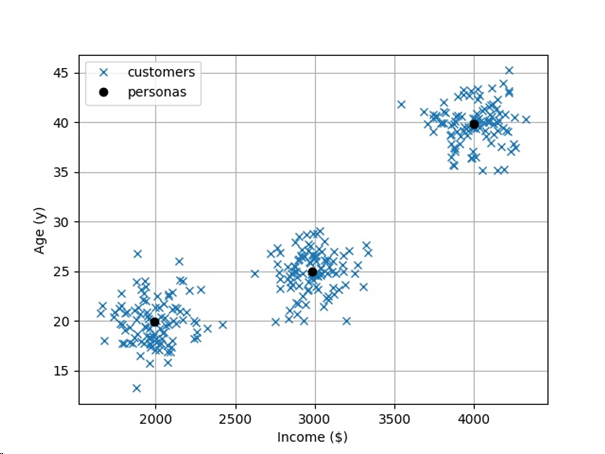
If there is one clustering algorithm you need to know – whether you are a computer scientist, data scientist, or machine learning expert – it’s the K-Means algorithm. In this tutorial drawn from my book Python One-Liners, you’ll learn the general idea and when and how to use it in a single line of Python … Read more

How to Convert a Tensor to a NumPy Array in TensorFlow?

There are two ways to convert a Tensor to a NumPy array: TensorFlow version 2.x — use tensor.numpy() TensorFlow version 1.x — use tensor.eval(session=tf.compat.v1.Session()) Let’s dive into these two methods in greater detail. Method 1: Explicit Tensor to NumPy Array Conversion in TensorFlow 2.x To convert a tensor t to a NumPy array in TensorFlow … Read more

16 PDF Cheat Sheets for Programmers

A couple of years ago, I fell into the habit of creating cheat sheets when exploring certain areas in the programming space. Over time, hundreds of thousands of Finxters have downloaded and used them in their own learning journeys. However, the cheat sheets are largely scattered around many different locations on the Finxter ecosystem. And … Read more

Python Linear Regression with sklearn – A Helpful Illustrated Guide

Machine Learning Linear Regression Python

?Β This tutorial will show you the most simple and straightforward way to implement linear regression in Python—by using scikit-learn’s linear regression functionality. I have written this tutorial as part of my book Python One-Liners where I present how expert coders accomplish a lot in a little bit of code. Feel free to bookmark and download … Read more

NumPy Diff Simply Explained [Tutorial + Video]

NumPy’s np.diff() function calculates the difference between subsequent values in a NumPy array. For example, np.diff([1, 2, 4]) returns the difference array [1 2]. Here is a simple example to calculate the Fibonacci number differences: This code snippet shows the most simple form of the np.diff() method: how to use it on a one-dimensional NumPy … Read more