The following lists high-quality free AI/ML books. Each entry links to the official source, lists the authors, notes the free format (PDF/HTML/etc.) and whether a sign‑up is required. The books are roughly ordered from more influential and comprehensive texts to specialized or emerging topics.
- Deep Learning — Ian Goodfellow, Yoshua Bengio, Aaron Courville (HTML; no signup). This seminal MIT Press text provides a sweeping treatment of deep learning theory and practice, covering everything from linear algebra and probability theory to convolutional and generative models. The authors note that the online version is complete and will remain freely accessible. The book uses an HTML format rather than a downloadable PDF because the MIT Press contract forbids easy‑to‑copy electronic formats.
- Understanding Deep Learning — Simon J. D. Prince (PDF/HTML; no signup). Prince’s 2024 textbook strikes a pragmatic balance between theory and practice, distilling the most important ideas in deep learning into an intuitive narrative. The free computer books entry lists the ebook as Creative‑Commons licensed and highlights that it explains Python implementations for tasks like natural‑language processing and face recognition
- An Introduction to Statistical Learning — Gareth James, Daniela Witten, Trevor Hastie, Robert Tibshirani (PDF; no signup). Often abbreviated ISLR, this classic introduces regression, classification, resampling, regularization, support‑vector machines and more. The authors explain that the book provides a broad and less technical treatment of statistical learning concepts, and the site offers free PDF downloads of the first and second editions as well as the new Python edition
- The Elements of Statistical Learning — Trevor Hastie, Robert Tibshirani, Jerome Friedman (PDF; no signup). A foundational text for researchers, it delves into advanced topics such as boosting, support‑vector machines and graphical models. The authors have made the entire book available as a free PDF, and many graduate courses reference its rigorous treatment of machine‑learning theory.
- Mathematics for Machine Learning — Marc Peter Deisenroth, A. Aldo Faisal, Cheng Soon Ong (HTML/PDF; no signup). This book provides the linear algebra, calculus and probability foundations required to understand modern machine‑learning algorithms. The authors released the PDF and HTML versions under a permissive license, making it easy to read online or download for personal study.
- Dive into Deep Learning — Aston Zhang, Zachary C. Lipton, Mu Li, Alex J. Smola et al. (HTML/PDF/Jupyter notebooks; no signup). D2L is an interactive, open‑source book built with Jupyter notebooks; it covers deep learning fundamentals with code examples in multiple frameworks and is updated continually by the community. The HTML version is freely accessible and can be converted to PDF or run locally.
- Reinforcement Learning: An Introduction (2nd ed. draft) — Richard S. Sutton, Andrew G. Barto (HTML/PDF; no signup). This book introduces reinforcement learning concepts from dynamic programming to policy‑gradient methods. The authors have posted the entire second‑edition draft online, emphasizing that it is freely available for educators and students.
- Gaussian Processes for Machine Learning — Carl E. Rasmussen, Christopher K. I. Williams (PDF; no signup). Rasmussen and Williams offer the definitive reference on Gaussian‑process models for regression and classification. MIT Press hosts a free PDF of the book as part of its open‑access program.
- Information Theory, Inference, and Learning Algorithms — David J. C. MacKay (HTML/PDF; no signup). MacKay’s eclectic text blends information theory with inference and coding, culminating in applications such as neural networks and Bayesian inference. The author provides chapter‑by‑chapter HTML pages and downloadable PDFs from his website.
- Understanding Machine Learning: From Theory to Algorithms — Shai Shalev‑Shwartz, Shai Ben‑David (PDF; no signup). This graduate‑level textbook gives a principled introduction to the algorithmic foundations of machine learning, covering VC dimension, boosting and kernel methods. The authors allow free download of the PDF for personal use.
- Interpretable Machine Learning — Christoph Molnar (HTML/PDF; no signup). Molnar’s open‑source book surveys interpretability methods such as partial‑dependence plots, SHAP values and counterfactual explanations. Regularly updated through GitHub, it has become a key resource for practitioners seeking to make black‑box models more transparent.
- Fairness and Machine Learning: Limitations and Opportunities — Solon Barocas, Moritz Hardt, Arvind Narayanan (HTML/PDF; no signup). This work analyses fairness, accountability and transparency in machine‑learning systems. The authors discuss bias, discrimination and possible interventions, and they provide a freely downloadable PDF alongside a living HTML version.
- Computer Vision: Algorithms and Applications (2nd ed. draft) — Richard Szeliski (PDF; no signup). Covering image formation, feature detection, stereo vision and 3‑D reconstruction, this widely used text serves both as a reference and as course material. The author has made the second‑edition draft PDF available for free download.
- Speech and Language Processing (3rd ed. online draft) — Daniel Jurafsky, James H. Martin (HTML; no signup). The draft of the third edition of this influential NLP textbook is hosted openly, with chapters on language models, transformers and dialog systems. Readers can follow along as the authors update the content to reflect the latest research.
- Graph Representation Learning — William L. Hamilton (PDF; no signup). Hamilton’s concise book introduces techniques for learning on graphs, including node embeddings, graph neural networks and applications to knowledge graphs. A free PDF is provided on the author’s website.
- A Course in Machine Learning — Hal Daumé III (PDF; no signup). Originally lecture notes, this book emphasizes understanding over formalism and covers decision trees, perceptrons, kernels and structured prediction. The author maintains a free PDF and invites feedback from learners.
- Bayesian Reasoning and Machine Learning — David Barber (PDF; no signup). Barber’s text uses a probabilistic framework to cover graphical models, variational inference and sampling methods. The full PDF is freely accessible, accompanied by MATLAB code examples.
- Neural Networks and Deep Learning — Michael A. Nielsen (HTML; no signup). Nielsen’s interactive online book introduces neural networks using clear prose, interactive visualizations and Python exercises. It focuses on intuitively explaining backpropagation, gradient descent and convolutional nets.
- Introduction to Information Retrieval — Christopher D. Manning, Prabhakar Raghavan, Hinrich Schütze (HTML/PDF; no signup). This classic covers indexing, vector‑space models, web search and text classification. The authors host the full HTML edition and a PDF on their Stanford page.
- Convex Optimization — Stephen Boyd, Lieven Vandenberghe (PDF; no signup). Boyd and Vandenberghe’s book is a staple for anyone studying optimization, providing theory and applications from signal processing to machine learning. A free PDF is provided on the authors’ website.
- Bandit Algorithms — Tor Lattimore, Csaba Szepesvári (HTML/PDF; no signup). This open‑access text covers multi‑armed bandits, regret bounds and reinforcement learning connections. The authors maintain both HTML chapters and a printable PDF.
- Algorithms for Reinforcement Learning — Csaba Szepesvári (PDF; no signup). This concise book focuses on fundamental RL algorithms such as Monte‑Carlo methods, temporal‑difference learning and policy gradients. It is available as a free PDF on the author’s site.
- Reinforcement Learning and Optimal Control — Dimitri P. Bertsekas (PDF; no signup). Bertsekas offers a rigorous treatment of RL and dynamic programming, highlighting connections to optimal control. A full PDF is provided free for personal use.
- Deep Learning for Coders with fastai and PyTorch — Jeremy Howard, Sylvain Gugger (HTML/Jupyter notebooks; no signup). Targeted at practitioners, this book teaches deep learning through hands‑on coding examples with fastai and PyTorch. The entire text and accompanying notebooks are freely accessible on the fast.ai website.
- Machine Learning Yearning — Andrew Ng (PDF; no signup). Ng’s concise guide helps engineers and product managers understand how to structure machine‑learning projects. The PDF is distributed at no cost and covers topics like error analysis, data collection and model deployment.
- Probabilistic Machine Learning: An Introduction — Kevin P. Murphy (HTML/PDF; no signup). The first volume of Murphy’s new series introduces probabilistic models and inference techniques with many modern examples. A draft PDF and HTML version are freely available under a Creative‑Commons license
- Machine Learning: A Probabilistic Perspective — Kevin P. Murphy (PDF; no signup). Murphy’s earlier 2012 textbook remains a comprehensive reference, covering Bayesian networks, graphical models and variational inference. The author provides a free PDF version for personal use
- Foundations of Data Science — Avrim Blum, John Hopcroft, Ravindran Kannan (PDF; no signup). This draft text blends algorithms, machine learning and statistics, highlighting randomized algorithms, spectral methods and clustering. Cornell University hosts the complete PDF freely
- Foundations of Machine Learning — Mehryar Mohri, Afshin Rostamizadeh, Ameet Talwalkar (PDF/HTML; no signup). This MIT Press book formalizes learning theory concepts such as VC dimension, Rademacher complexity and kernel methods. The publisher makes the PDF and HTML versions freely available under a Creative‑Commons license
- Algorithms for Decision Making — Mykel J. Kochenderfer, Tim A. Wheeler, Kyle H. Wray (PDF; no signup). The text applies decision‑making under uncertainty to robotics and autonomous systems, discussing Markov decision processes, POMDPs and planning algorithms. MIT Press hosts a complete PDF under a CC BY‑NC‑ND license
- Reinforcement Learning: Theory and Algorithms — Alekh Agarwal, Nanjiang Yuan, Sham Kakade, Michael J. Kearns, Alexander Rakhlin, Ambuj Tewari (PDF; no signup). This working draft surveys modern RL theory, including regret analysis, policy‑gradient methods and exploration strategies. A free PDF is available through the authors’ repository
- Automated Machine Learning: Methods, Systems, Challenges — Frank Hutter, Lars Kotthoff, Joaquin Vanschoren (eds.) (PDF/HTML; no signup). This open‑access book covers hyperparameter optimization, neural‑architecture search and AutoML systems. The preface states that it is distributed under a Creative‑Commons license and may be downloaded freely
- Probabilistic Programming and Bayesian Methods for Hackers — Cameron Davidson‑Pilon (Jupyter notebooks/PDF; no signup). This open‑source book introduces Bayesian inference through interactive Python notebooks, using real‑world datasets and intuitive explanations. The GitHub repository notes that the book is under the MIT license and can be freely copied and modified
- Think Bayes — Allen B. Downey (HTML/PDF; no signup). Downey’s text teaches Bayesian statistics using Python, focusing on coding rather than mathematical derivations. The author explains that readers are free to copy, distribute and modify the book as long as they attribute and share‑alike
- The Hundred‑Page Machine Learning Book — Andriy Burkov (PDF chapters; no signup). Burkov distills key machine‑learning concepts into a slim volume that covers supervised, unsupervised and reinforcement learning. The book’s “read‑first, buy‑later” principle allows free downloading of chapters under a CC BY‑SA license
- Machine Learning Engineering — Andriy Burkov (PDF; no signup). This companion to the Hundred‑Page book focuses on building reliable ML systems, covering design patterns, data pipelines and monitoring. The author describes a “read‑first, buy‑later” approach and releases a free PDF for personal use
- The Little Book of Deep Learning — François Fleuret (PDF; no signup). Originally designed to be read on a phone, this concise booklet introduces deep‑learning basics and key models. The website notes that the book is licensed under a non‑commercial Creative‑Commons license and offers phone‑formatted and printable PDFs
- Applied Causal Inference — Robert Osgood, others (HTML; no signup). Osgood’s web‑based book teaches causal inference using graphical models, propensity scores and difference‑in‑differences. The website explains that the web version is free of charge and invites readers to donate or purchase the paperback
- Artificial Intelligence: Foundations of Computational Agents (2nd edition) — David L. Poole, Alan K. Mackworth (HTML; no signup). This undergraduate‑level AI textbook covers search, logic, planning and machine learning, with a new chapter on ethics. The authors provide the full HTML edition online and note that it is available under a Creative‑Commons license
- A Brief Introduction to Machine Learning for Engineers — Osvaldo Simeone (PDF; no signup). This short text offers an engineer‑friendly overview of key ML concepts, contrasting discriminative vs. generative models and frequentist vs. Bayesian approaches. The freecomputerbooks page describes it as an open introduction to fundamental machine‑learning concepts
- Unlocking Artificial Intelligence: From Theory to Applications — Yongjian Yu, Shoucheng Chen, Anwen Yu (PDF/EPUB; no signup). This 2024 open‑access book surveys AI and machine‑learning techniques and their applications in areas like natural‑language processing and recommendation systems. Springer’s page notes that the book is open access and provides a free PDF download
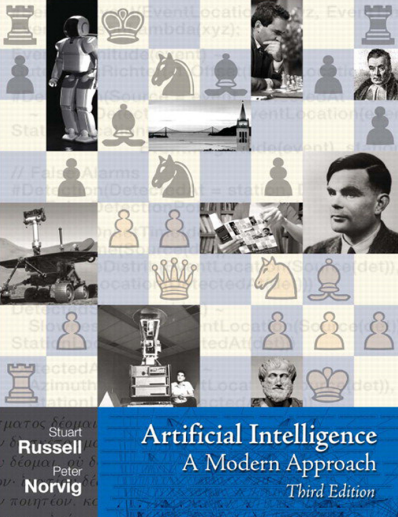
Last but not least, this outstanding book with 1151 pages will definitely get you up to speed in AI:
- Artificial Intelligence – A Modern Approach — Stuart J. Russell and Peter Norvig