Are KDP Ads Worth It? A Standalone Breaks Even at $0.27 a Click, a 5-Book Series at $0.83

Are KDP ads worth it? A $3.99 standalone breaks even at $0.27 a click, a 5-book series at $0.83, vs $0.70-0.90 fiction CPCs. Python calculator inside.

Are KDP ads worth it? A $3.99 standalone breaks even at $0.27 a click, a 5-book series at $0.83, vs $0.70-0.90 fiction CPCs. Python calculator inside.
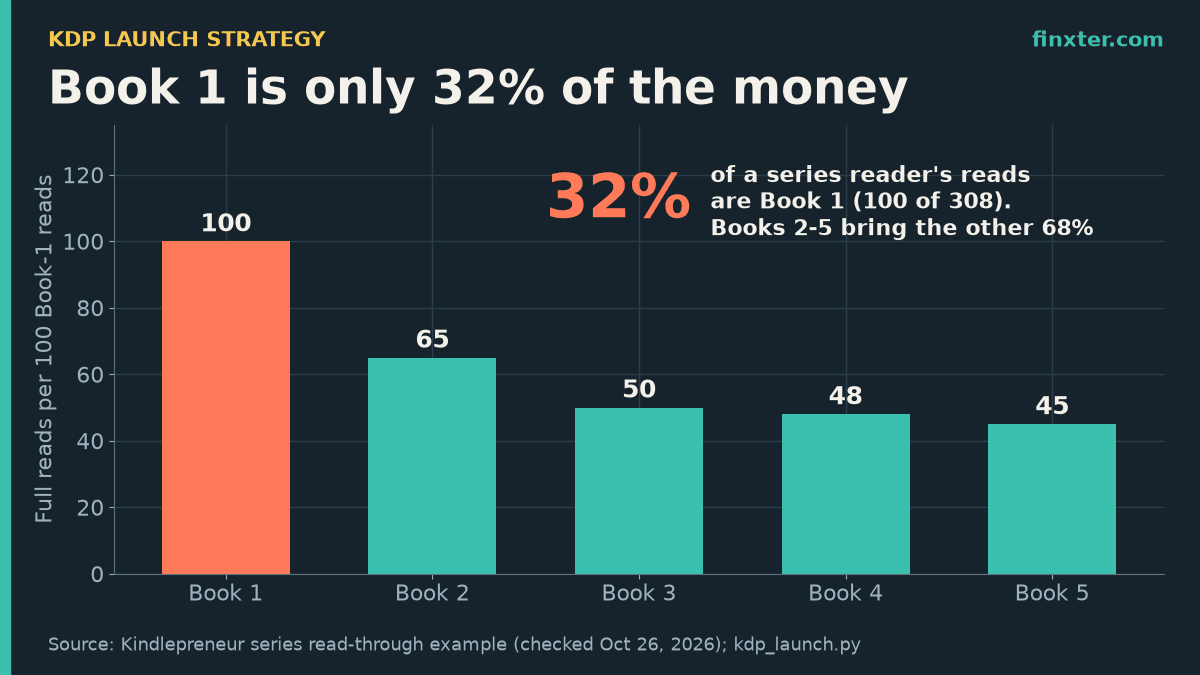
KDP launch strategy for series authors: Book 1 is only 32% of a reader’s value. Pre-order rules, bank-or-publish math, and 12 months of KU pay per read ($1.26 to $1.61) so you know which lever matters.
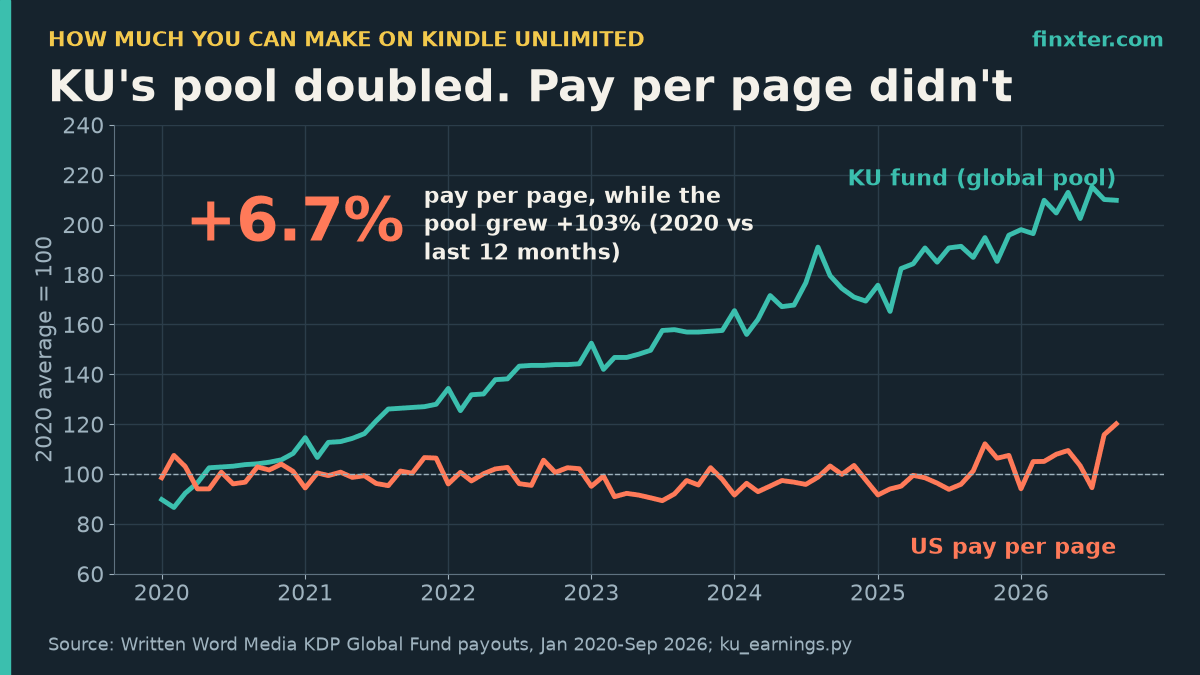
How much can you make on Kindle Unlimited? About $1.43 per full 300-page read in 2026, so $1,000/month needs ~699 reads. Series math + Python script.
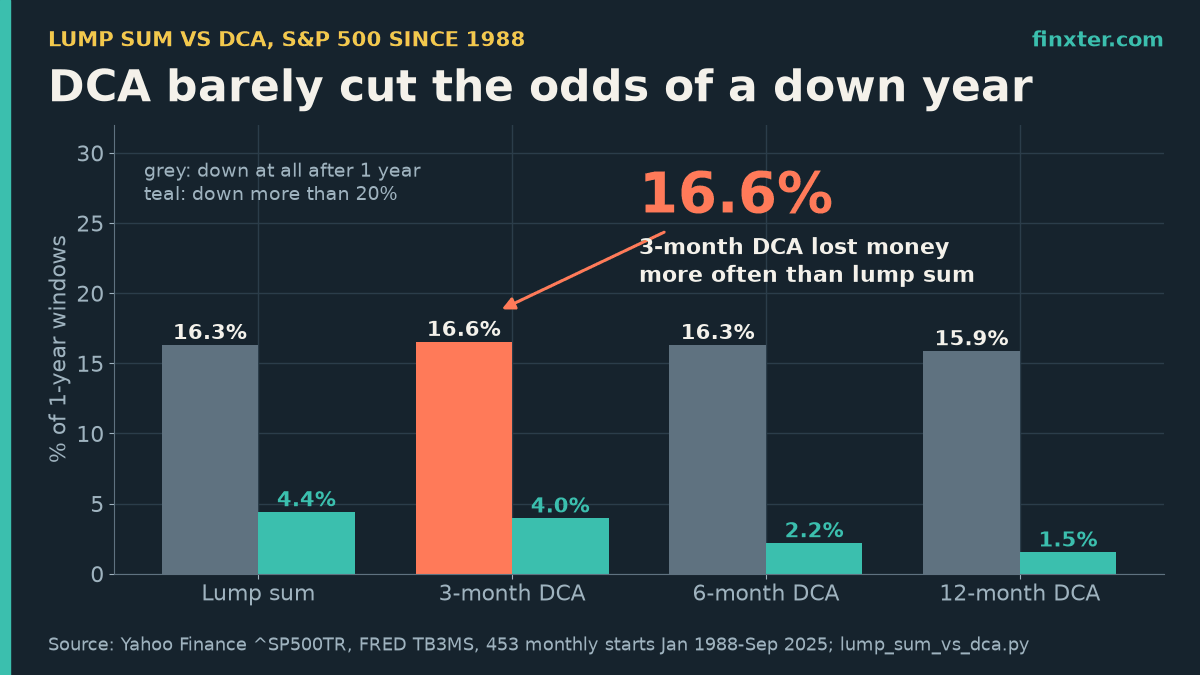
Lump sum vs DCA S&P 500 since 1988: lump sum won 65-78% of 453 start months, and DCA barely changed the odds of a losing year. Python script included.
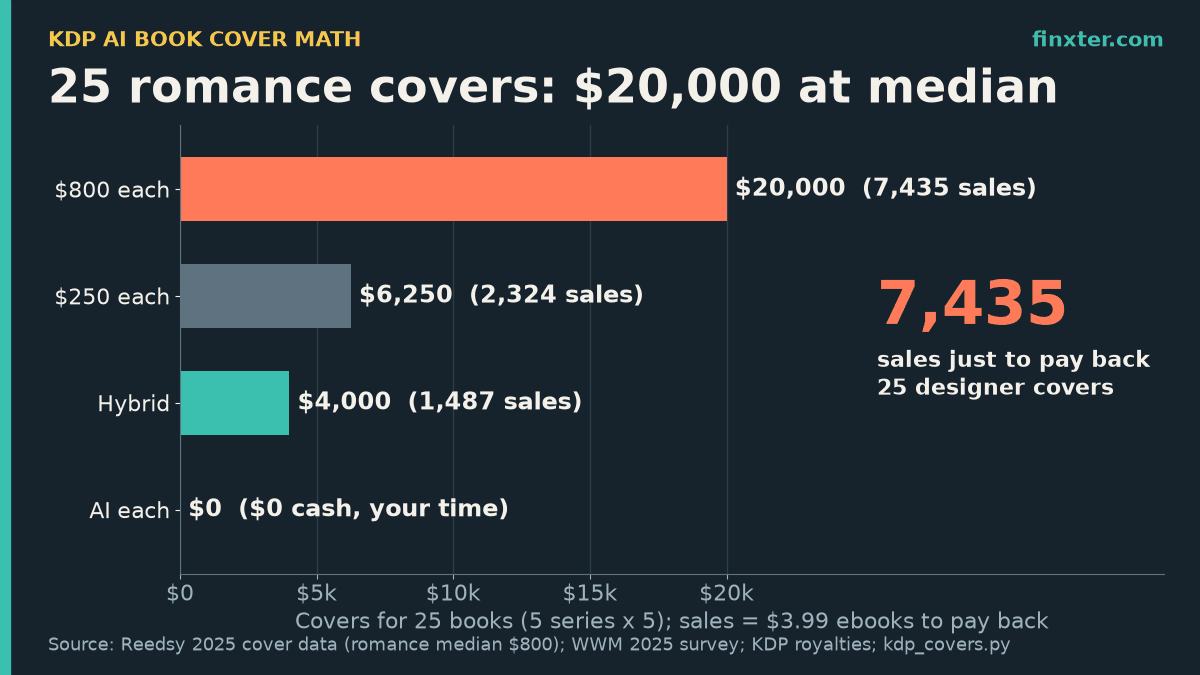
KDP AI book cover rules and math: disclose AI images, use 1600×2560. 25 designer romance covers cost $20,000; a hybrid $4,000. Python payback calculator.
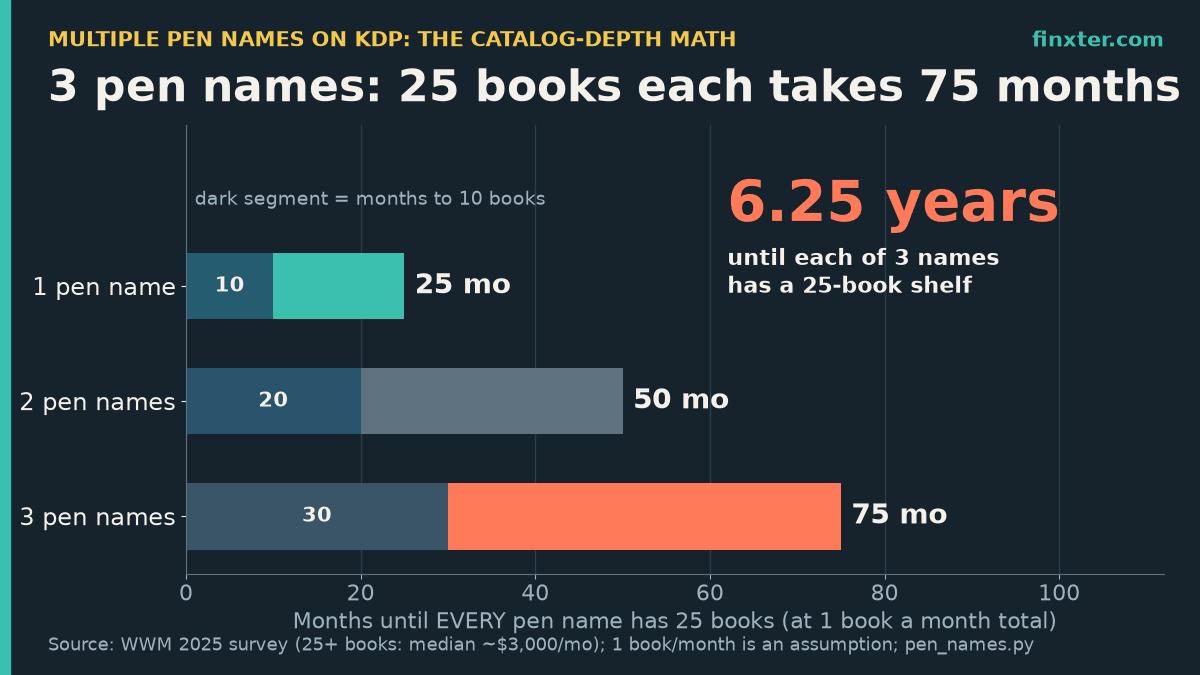
Multiple pen names on KDP? KDP allows them, but at 1 book a month 3 names need 75 months to reach 25 books each. When splitting pays, with Python math.
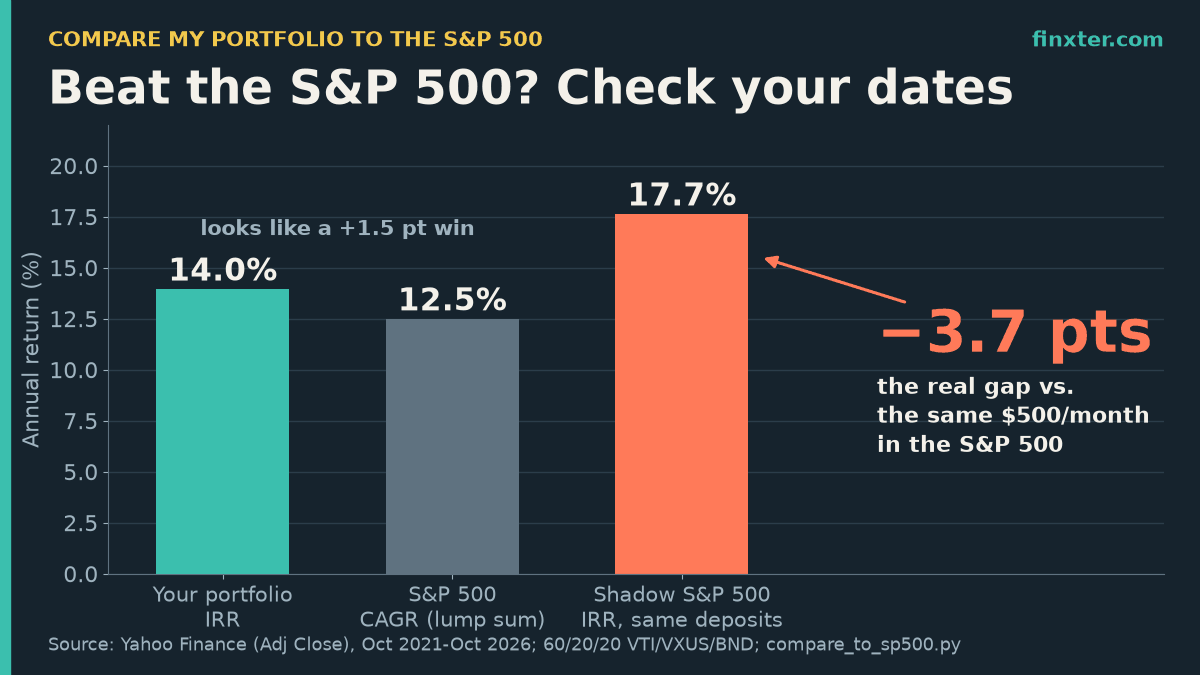
How to compare my portfolio to the S&P 500 the right way: a Python shadow benchmark on 5 years of real data turns a fake +1.5-point win into a 3.7-point loss.
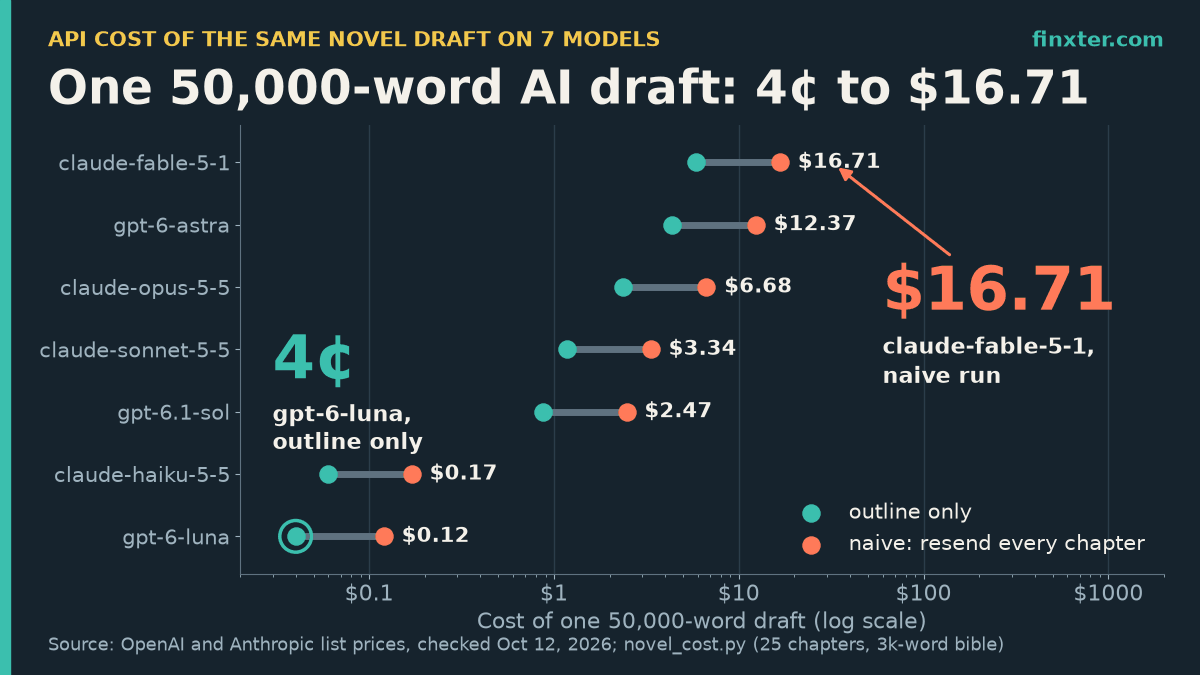
A small Python cost model prices a 50,000-word first draft on seven OpenAI and Claude models: from $0.04 to $16.71. About 73% of a naive bill is resending earlier chapters, and prompt caching removes most of it.
I’m sitting in front of my computer refactoring Python code and have just thought of the following question: Can You Use a Regular Expression with the Python string.startswith() Method? The short answer is no. The string.startswith() method doesn’t allow regular expression inputs. And you don’t need it because regular expressions can already check if a … Read more
While refactoring my Python code, I thought of the following question. Can You Use a Regular Expression with the Python endswith() Method? The simple answer is no because if you can use a regex, you won’t even need endswith()! Instead, use the re.match(regex, string) function from the re module. For example, re.match(“^.*(coffee|cafe)$”, tweet) checks whether … Read more

Are you looking for the best way to become a professional Python developer? After reading this article, you will have a crystal clear plan for learning Python. You don’t need any programming skills for this plan to work. In short, you invest 70% of your learning time in practical projects and 30% in mastering the … Read more
The np.arange() function appears in 21% of the 35 million Github repositories that use the NumPy library! This illustrated tutorial shows you the ins and outs of the NumPy arange function. So let’s get started! What’s the NumPy Arange Function? The np.arange([start,] stop[, step]) function creates a new NumPy array with evenly-spaced integers between start … Read more